
Prosthetic Solutions
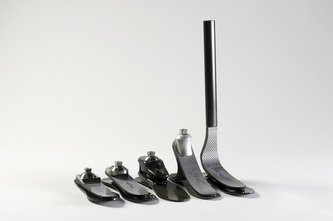
 SACH Foot: The SACH is the simplest type of non-articulated foot. The name refers to a somewhat soft rubber heel wedge that mimics ankle action by compressing under load during the early part of the stance phase of walking. The keel is rigid, which provides midstance stability but little lateral movement. The SACH foot is available in various heel heights to match individual shoes with different heel heights.
 Single-Axis Foot: The articulated single axis foot contains an ankle joint that allows the foot to move up and down, enhancing knee stability. The more quickly the full sole of the foot is in contact with the ground, the more stable the prosthesis becomes. This is beneficial for users with higher levels of amputation (an amputation anywhere between the knee and hip). The wearer must actively control the prosthesis to prevent the knee from buckling, and the single-axis ankle/foot mechanism reduces the effort required to do so. Unfortunately, the single-axis ankle adds weight to the prosthesis, requires periodic servicing, and is slightly more expensive than the more basic SACH foot. A single-axis foot may be more appropriate for individuals where stability is a concern.
 People with more active lifestyles typically prefer a more responsive foot. A dynamic-response foot is ideal for those individuals who can vary walking speed, change directions quickly or walk long distances. Dynamic-response feet store and release energy during the walking cycle by absorbing energy in the keel during the “roll-over” phase and then springing back to provide a subjective sense of push-off for the wearer. Additionally, they provide a more normal range of motion and a more symmetric gait. Some dynamic-response feet feature a split-toe design that further increases stability by mimicking the inversion/eversion movements of the human ankle and foot.
Prosthetic Knees
My daughter started her journey with AFOs 12 years ago with Bob. She was 2 and he carefully fitted her little feet perfectly. He has taken good care of her over the years and we are grateful for his expertise and kindness with our girl. Highly recommend them!
- J. Morrow Abram
I have NEVER been treated with anything but respect and kindness. I have never felt like an imposition just because my appointment ran a little late. New Life treats me as a person and not just another patient. Jesse Rettele is the head Prosthetist and he is always extremely professional and a man with immense integrity.
-T. Hellyer
Love love, love the personal attention that I have received since day one. Big thanks to Mark n Chris!
— D. Copaus Ford
I Dont usually go out of my way to right reviews on a person. But I believe you have a person working for u that deserves a little extra recognition. His name is Mark Pitambersingh. I was very skeptical about wearing a brace at first. Mark took the time to explain The benefits of wearing my brace. And makes me feel comfortable about wearing it. He also went out of his way to design something I liked looking at... Made sure it was comfortable. And worked for my daily grind. Today him and his staff got me in on short notice and did some adjustments to my brace that helped me tremendously. The staff at this location are always friendly and greet me with a smile. I always feel welcome and comfortable no matter what. Great people. Great service. These ppl are definitely making a difference in the world. Thanks again
- J. Tipton
I came in last year. A fairly new amputee. Lost, frustrated in pain. With very bad prostheses that did not fit. Not knowing a single thing to do after leg cut off, staples out and given this thing I could not use. A year and one revision with support team later I am happy. I might not even have much of a limp after too my PT noticed first walk with walker yesterday after. They take care of you. Check on you and do not just build you what you need and tell you to go figure it out on your own. Brent and Derrick are Awesome!!!!
-S. Rawis-DeMaya